Corpse of Discovery
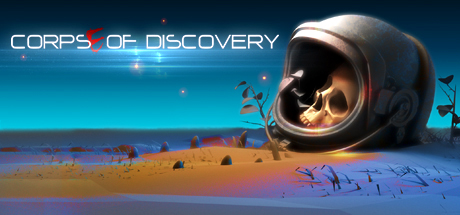
" Thought-provoking indie adventure with immersive alien worlds but repetitive gameplay and bugs "
Corpse of Discovery Review
Corpse of Discovery is a narrative-driven exploration game blending sci-fi themes with platforming elements. Players assume the role of an astronaut repeatedly waking on alien planets, guided by an AI companion, AVA. The game explores deep existential questions about life, family, and the consequences of workaholism through metaphoric storytelling and immersive environments. While its story and atmosphere resonate emotionally with many players, the gameplay loop of exploring vast planets and completing repetitive objectives can feel drawn-out and monotonous. Technical issues such as poor optimization, graphical glitches, and occasional clipping detract from the experience for some. Despite these flaws, the game’s unique art style, thought-provoking narrative, and humor have earned it praise, especially from players who appreciate intellectual and philosophical games. The overall experience is short, roughly 3-5 hours, and best suited for those who enjoy walking simulators with a contemplative tone. The game’s meta-narrative challenges players to reflect on their own time and life priorities, creating a memorable but polarizing experience.
While some find the story profound and emotionally moving, others criticize its heavy-handed messaging and lack of gameplay depth. The platforming and jetpack mechanics add variety but sometimes feel clunky or tedious. The game’s technical shortcomings and pacing issues limit its appeal to a niche audience. Nonetheless, Corpse of Discovery stands out as an ambitious indie title with a distinctive voice and meaningful themes, recommended mainly for players seeking a slow-paced, thoughtful adventure with minimal action.
Highlights
Players praise Corpse of Discovery for its deep, meaningful story exploring existential themes and family bonds.
The unique art style and atmospheric alien worlds create immersive exploration experiences.
Voice acting, especially AVA’s character, and the soundtrack receive consistent acclaim.
Gameplay mechanics like jetpack-assisted platforming and stealth add refreshing variation to the walking simulator format.
The game’s humor and intelligent references to pop culture and gaming lore are appreciated by many.
Its short duration and narrative focus make it appealing to fans of contemplative, story-driven indie games.
Criticisms
Common criticisms focus on the game’s repetitive and slow-paced gameplay, with large empty spaces between objectives causing player boredom.
Technical issues such as poor optimization, frame rate drops, graphical glitches, and clipping bugs disrupt immersion.
Some players find the story’s metaphor and messaging overly obvious and heavy-handed, detracting from narrative subtlety.
The platforming segments can feel clunky or frustrating, especially late in the game.
The game’s length and pacing lead some to feel it drags on unnecessarily and lacks replay value.
Controller sensitivity bugs and UI issues with subtitles also reduce accessibility.
Pros
- • Deep, thought-provoking story exploring existential and family themes.
- • Unique and immersive alien world art style and environments.
- • Excellent voice acting, particularly the AI companion AVA.
- • Jetpack platforming adds enjoyable vertical movement and variety.
- • Humorous and witty dialogue with smart cultural references.
- • Short, contemplative experience suitable for fans of walking simulators.
- • Emotional messages resonate strongly with some players.
Cons
- • Repetitive gameplay with long distances between objectives becomes tedious.
- • Poor optimization causes frame rate drops and stuttering.
- • Graphical glitches and clipping issues break immersion frequently.
- • Heavy-handed narrative delivery feels preachy to some players.
- • Platforming controls can be clunky and frustrating at times.
- • Lack of replay value due to linear story and limited mechanics.
- • Controller sensitivity bugs require manual resetting.
Rating Criteria



A first-person Walking Simulator exploring the deeper meaning of family, life goals, and personal choices (with a bit of humor and old-school sci-fi homage mixed in) – set on beautiful and lonely alien worlds.
User Reviews
Online Reviews
